
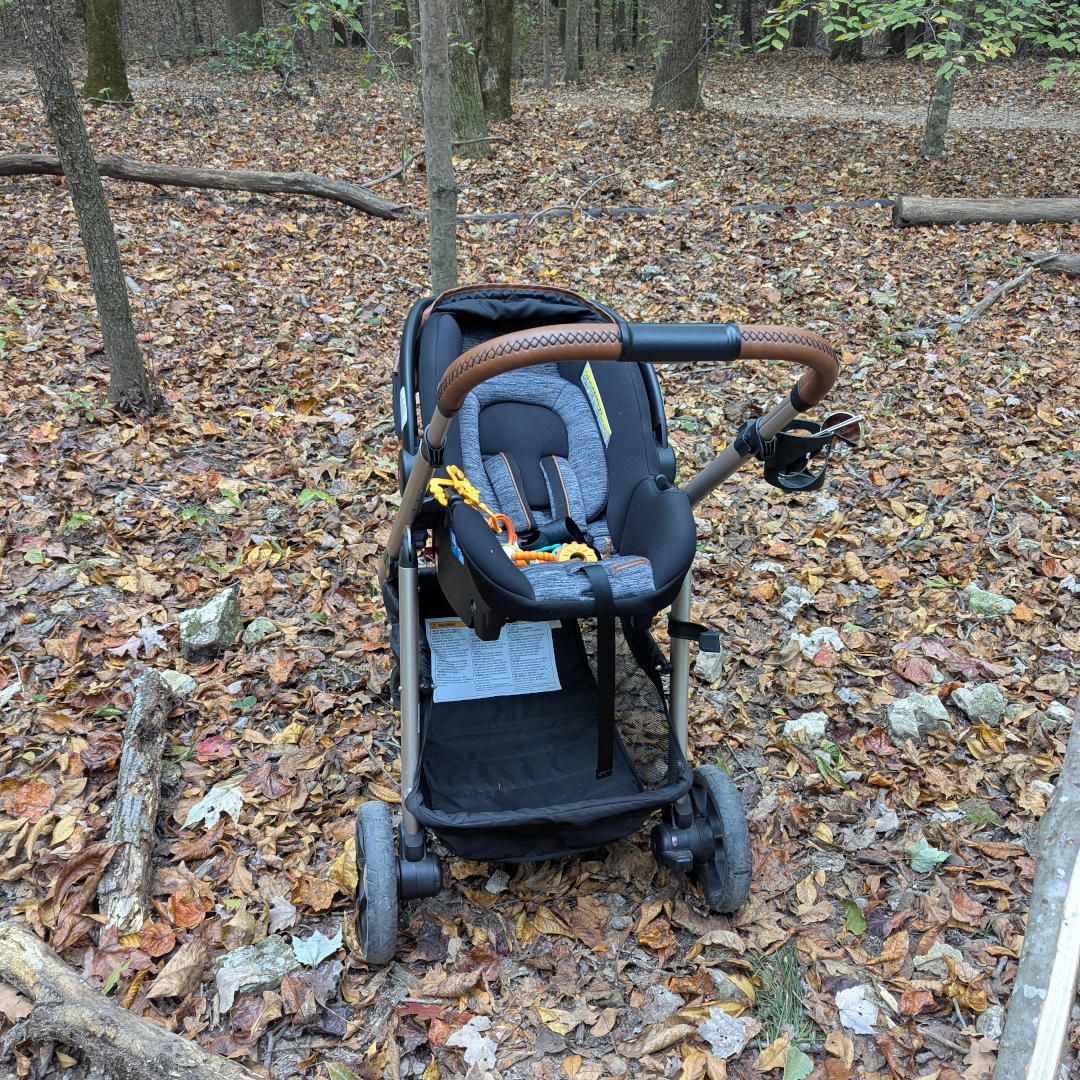
Our son was six months old when we made a trip to celebrate by going to see some of Tennessee’s best waterfalls. For that trip we ended up staying in a cabin instead of camping. At the time sorting out the baby camping gear for a full campout with a six-month-old just seemed like more than I wanted to figure out on the fly. Yet, when I we ended up carrying him on the trails, I had an entirely different perspective on what I should have done first. By the time we got home, I was already deep in research mode.
By the time this post goes live, he’ll be just about a year old. Since that first trip, I’ve planned another for this summer and grabbed quite a few of the items I researched. I’m ready to put this baby camping gear to the test, and I’m sure that my son will as well!
When doing my research, I found most baby camping gear lists are overwhelming, expensive, and don’t bother telling you that what a six-month-old needs is completely different from what a two-year-old needs. So I’ve organized this by category, flagged what I feel are the honest must-haves versus the nice-to-haves, and made sure to note where your baby’s age actually changes the answer.
This post contains affiliate links. Clicking on them costs you nothing, but it does help support my blog. I promise to never recommend a product or service that I haven’t tried or done plenty of research on. Thanks for reading and supporting!
Getting Your Baby to Sleep at Camp
I’ll be direct about this one: if the baby doesn’t sleep at camp, nobody sleeps at camp. I’ve heard enough stories from my friends who came back from their first trip looking like they’d been on a three-day forced march to know this is the category worth getting right. The good news is it comes down to two things: keep them safe and keep them warm.
For the sleep space, the Graco Pack ’n Play is a must-have and, hands down, the easiest call on this entire list. Chances are you’re like me and already own one. If you do, bring it. There is something to be said for putting a baby in a sleep space they recognize when everything else around them is completely new. The base Portable Playard is $65 at Walmart depending, folds down with a push of a few buttons, and comes with mesh sides, wheels, and a carrying bag.
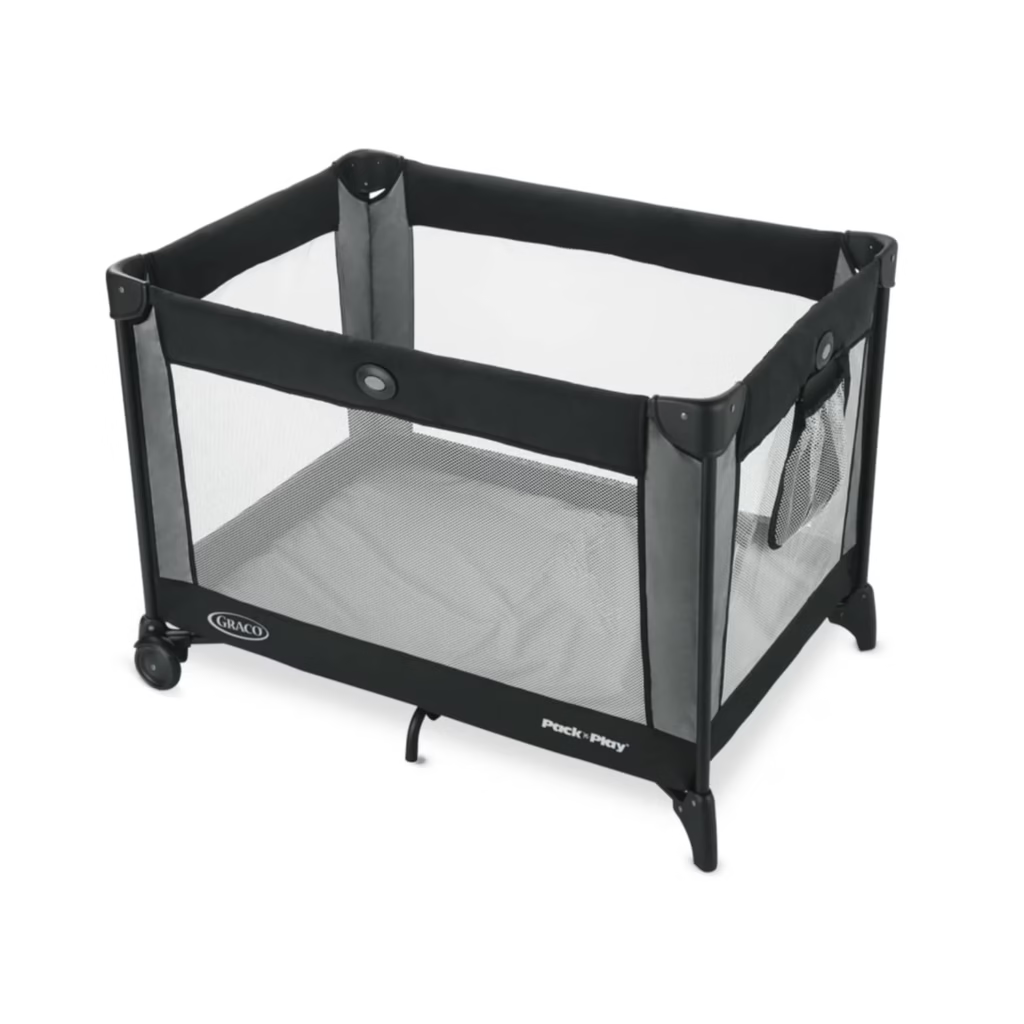
If you have a newborn under six months, the Anywhere Dreamer version with the removable bassinet ($120) is worth the step up. Either way, it earns its keep at home and at camp, which is my kind of gear.
The other half of the sleep equation is warmth. Once your baby hits six months, the Morrison Outdoors Little Mo 40° sleeping bag is the one to get. It is the only purpose-built camping sleeping bag for infants and toddlers that fully meets AAP safe sleep guidelines: no hood, no drawstrings, a snug fleece collar, and a bottom-up zipper for diaper changes without pulling the whole kid out.
Rated to 40°F, synthetic fill that handles damp mountain nights better than down, weighs under a pound, packs to the size of a large water bottle. At $84.95 at REI it is not cheap, but it is the kind of thing you buy and then can still get resell value when it’s outgrown.
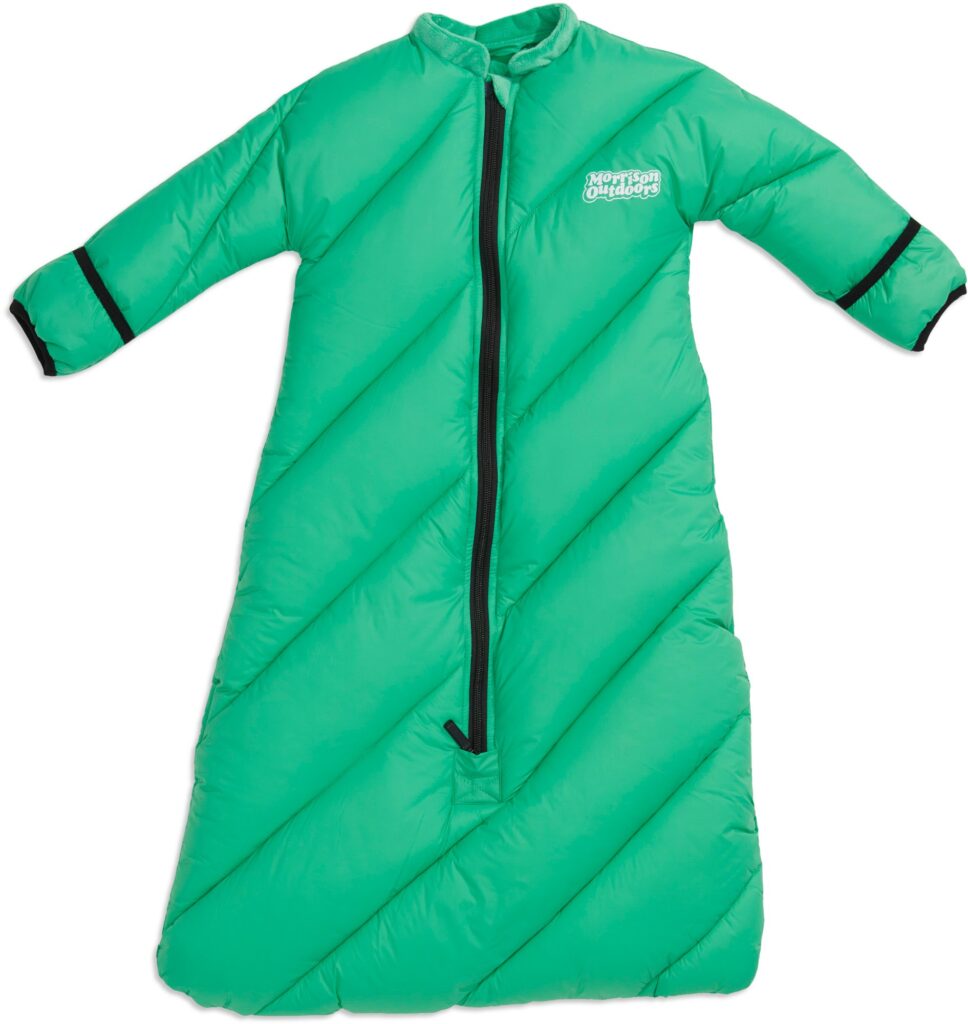
Also, please know that the Little Mo is not safe for babies under six months, even if they are wearing six-month clothing. The Pack ’n Play handles the full newborn stage on its own. And when your little one eventually grows out of the Little Mo, Morrison Outdoors makes the Big Mo 40° for toddlers at $99.95, also at REI.
Feeding Your Baby at Camp
This baby camping gear category looks different depending on where your baby is developmentally, so I’ll break it down simply. Breastfeeding families genuinely need less gear than they might think. Formula families need clean water access at the campsite sorted out before anything else. For solid-food eaters, there is one piece of baby camping gear that turns mealtimes at camp from a wrestling match into something approaching a normal meal.
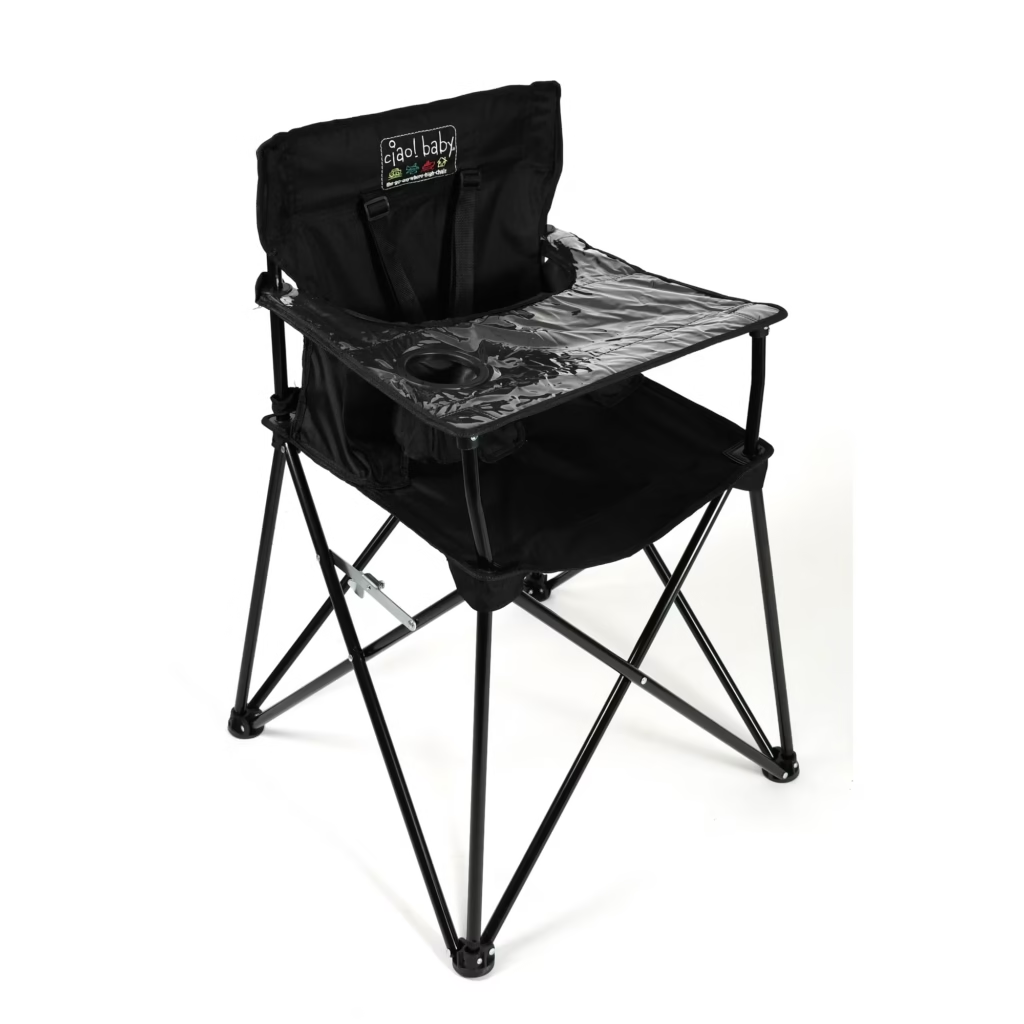
The ciao! baby Portable High Chair is a must-have the moment your baby is eating solids. It folds flat in seconds, locks open without any tools, weighs eight pounds, and includes a built-in tray that wipes clean with a damp cloth and a cup holder that actually gets used. The 5-point harness meets ASTM safety standards, and it holds children up to 35 pounds, so it will see you through at least the early toddler years without needing a replacement. Honestly, when it comes to camping gear for new parents, this might be my favorite thing!
For keeping everything cold, (breast milk or formula bottles, baby food, etc) we run two coolers depending on where we are. The Titan by Arctic Zone 24-Can Soft Cooler is our campsite workhorse. It holds ice for days (genuinely, not just in the marketing copy sense) and the waterproof exterior handles whatever the outdoors decides to throw at it.
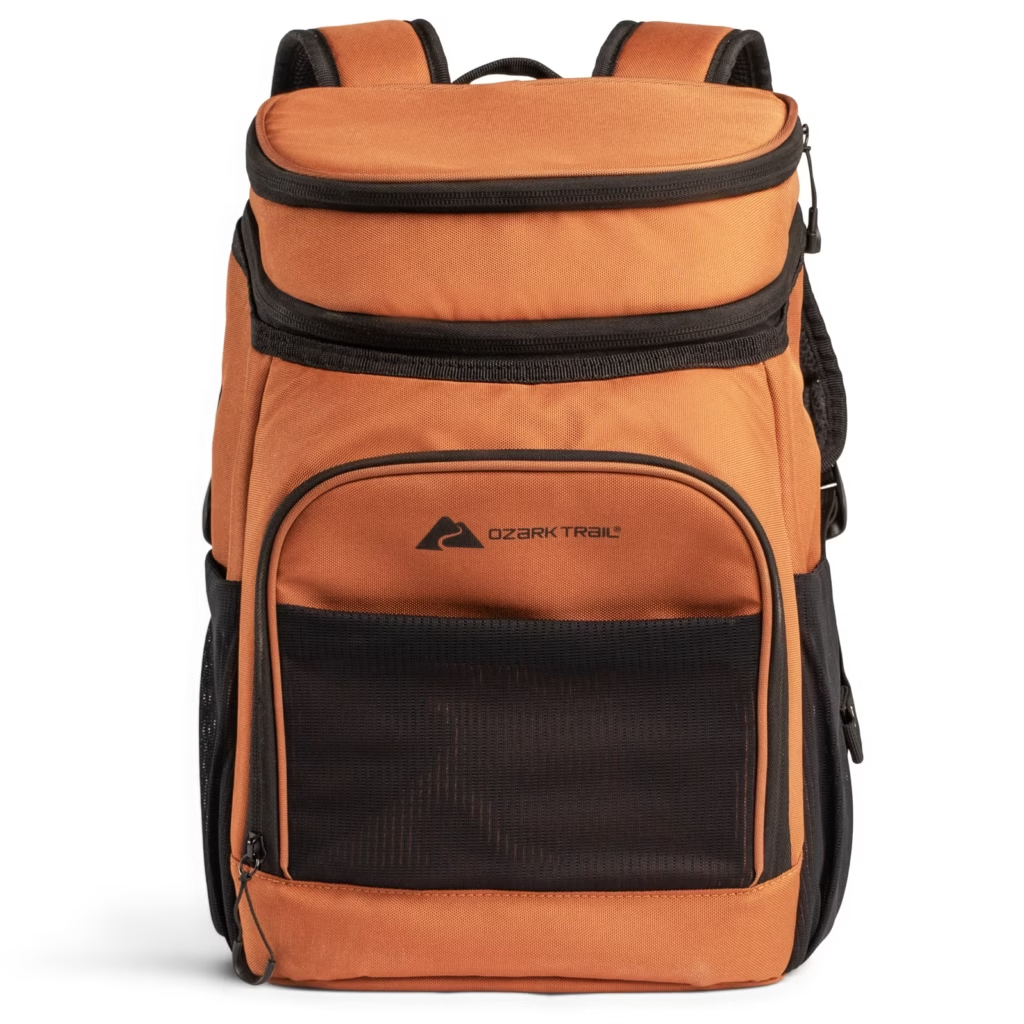
When we head out on the trail, the Ozark Trail 15 Qt Soft-Sided Cooler Backpack goes on my back and keeps both hands free. It is Walmart’s house brand, which means it is budget-friendly, and it has earned its spot on every trip we have taken. Both are available at Walmart.
If you want a dedicated bottle bag for shorter outings or day trips, the Momcozy Insulated Bottle Bag runs about $15–20 at Walmart and keeps a few bottles organized and cold without digging through the full camp cooler. Nice to have in your baby camping gear kit, but not essential for most trips.
When the baby starts eating solids, I recommend squeeze pouches from brands like Gerber and Happy Baby. They are genuinely underrated as a camping food option, especially on the go. No refrigeration, no prep, no mess. Your mileage may vary on how many your kid will eat before demanding something more interesting, but having a handful in the bag removes the stress from trail snacks entirely.
Keeping Baby Safe from Sun and Bugs
I find that two things will make a baby (and their parents) miserable outdoors faster than almost anything else: sunburn and bug bites.
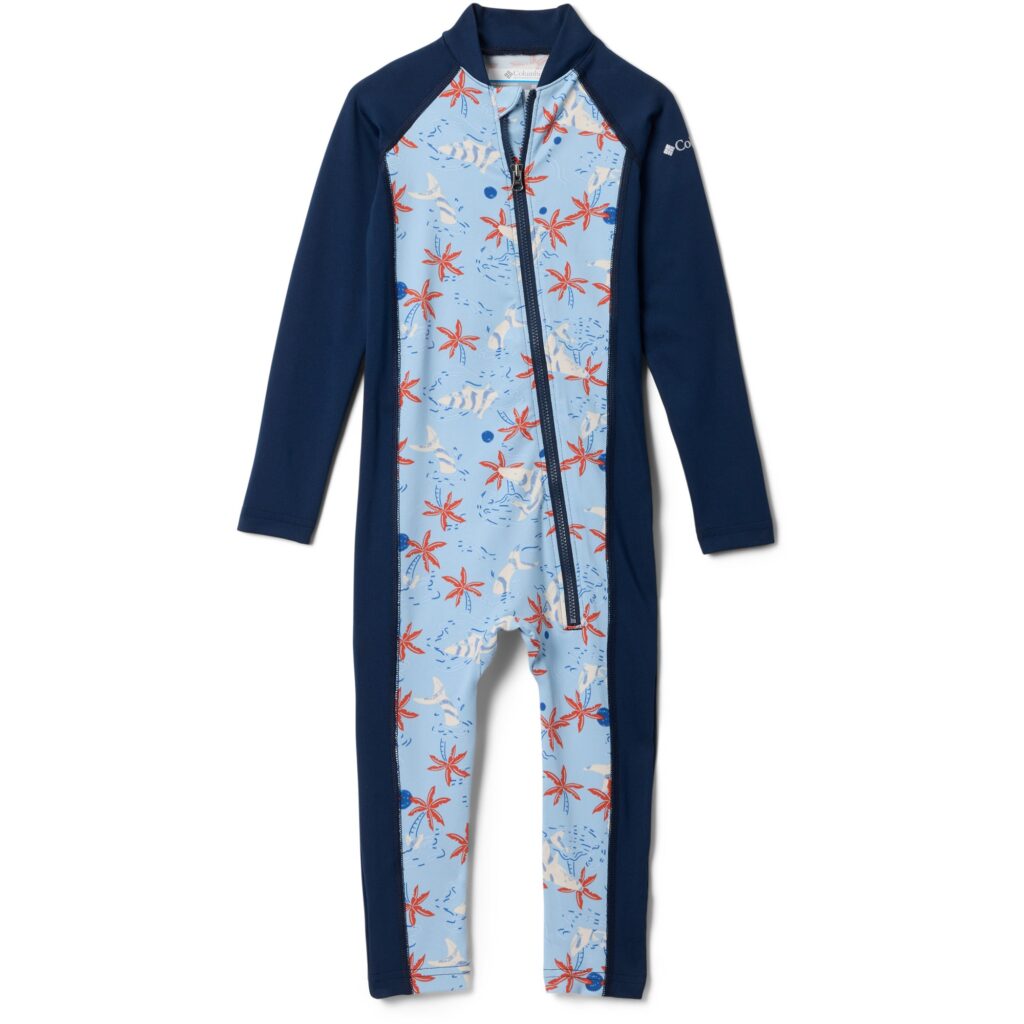
On the sun side, the Columbia Sandy Shores Sunsuit is the single most useful piece of clothing you can put on a baby at camp. It is a full-body UPF 50 suit made from quick-dry, moisture-wicking polyester with a full front zip for easy on and off. What that means in practice is that you only need to apply sunscreen to your baby’s face, hands, and feet. As an added bonus, it doubles as a swimsuit!
I’d pair it with the Wonder Nation Bucket Hat which is also UPF 50 and wide-brimmed. Getting a hat to stay on a baby is its own adventure, but when it stays on, it does the job well.
On the bug side, I’ll give you the honest version rather than the polished one. The American Academy of Pediatrics and the CDC both recommend DEET or picaridin as the most effective options for children. Natural alternatives like oil of lemon eucalyptus sound appealing but are not recommended for children under three, even though they are widely marketed as the gentler choice. The age limit that matters most: no chemical repellents of any kind for babies under two months. For everyone older than that, both are safe when applied as directed.
For DEET, Cutter All Family Insect Repellent is the no-frills pick: low-concentration, budget-friendly, and available at any Walmart. If you’d rather go DEET-free, OFF! Clean Feel uses 20% picaridin, is fragrance-free, and gives you up to eight hours of protection. One practical note for both: do not use a combo sunscreen and bug spray product. Sunscreen needs to be reapplied every two hours. Bug repellent does not. Using a combo means you are either over-applying one or under-applying the other.
Hiking with Baby: Child Carriers
This one got personal on the Tennessee waterfall trip. Carrying a six-month-old on uneven trail terrain without a proper carrier is about as graceful as it sounds. A dedicated hiking child carrier is what would have changed that day, and it is what we are planning to use on our next camping trip this summer.
I want to be upfront about something before I get to the recommendation. These are genuinely an expensive piece of baby camping gear that not everyone will need or want. If this is your first trip and the trails are short and flat, a soft front carrier you already own can be used just fine. In fact, we did exactly this on a hike in December when my son was still small enough to comfortably carry. I feel like the frame carrier earns its keep once you know this is something your family actually wants to do, or you plan on tackling tougher terrain.
One thing to confirm before buying anything: your baby needs to be able to sit upright unassisted before going into a frame carrier. That typically happens around six months at a minimum weight of 16 pounds.
The honest budget move here is to buy used. REI Used and Facebook Marketplace regularly have Kelty and Osprey carriers in excellent condition for $100–150. These packs are built to last through multiple kids and hold up well secondhand. I would look there before spending full retail.
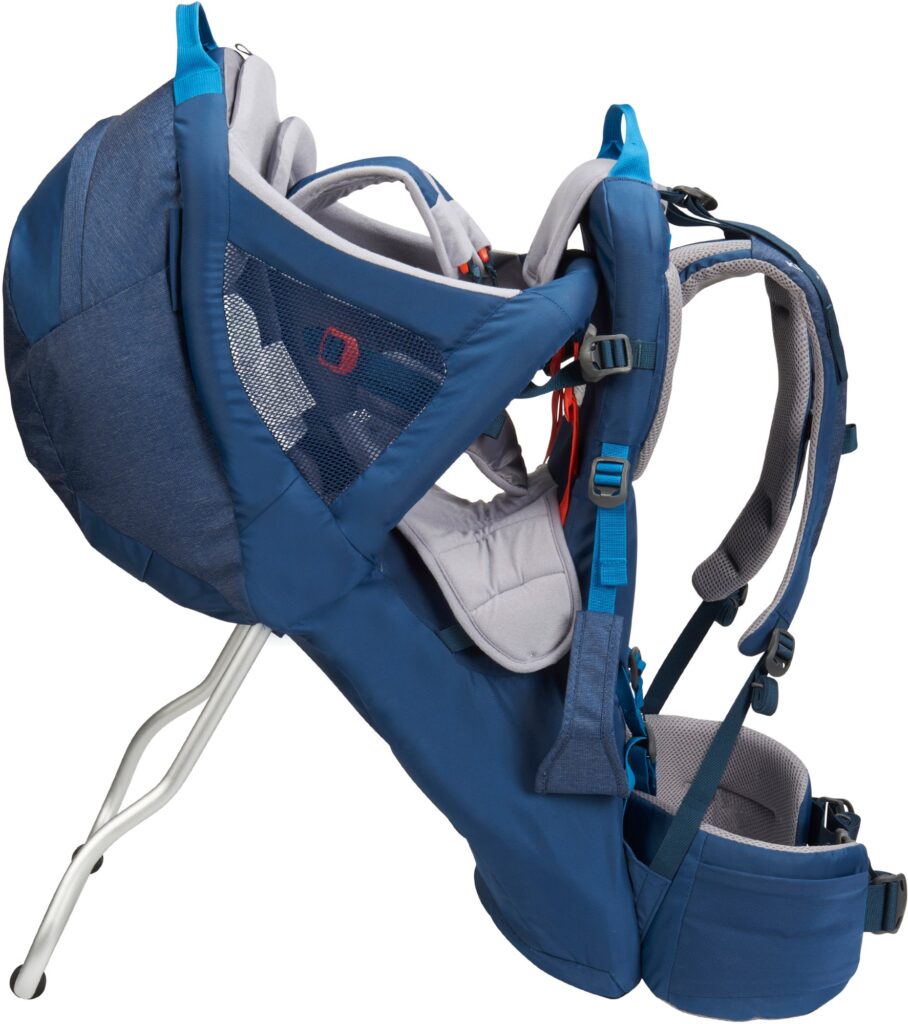
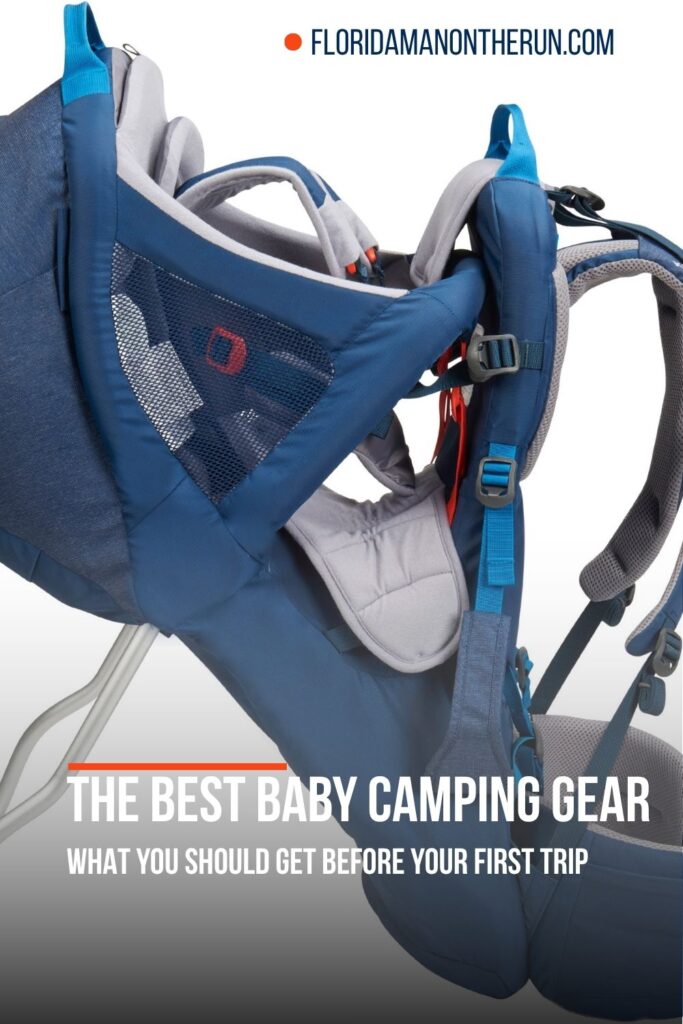
When you are ready to buy, new or used, the Kelty Journey PerfectFIT is the benchmark to look for. The PerfectFIT suspension adjusts to fit both parents without tools, the 5-point harness and padded aluminum roll cage keep things secure on variable terrain, and the kickstand makes loading and unloading considerably less stressful than it sounds.
Getting Around on the Trail: All-Terrain Strollers
Perhaps the most eye-opening moment of our Tennessee waterfall trip was at Cummins Falls. We made an attempt at taking our normal stroller on the “accessible” trail, and that failed almost immediately. An all-terrain stroller would have changed that, and it is the piece of gear I am most looking forward to adding before this summer’s trip.
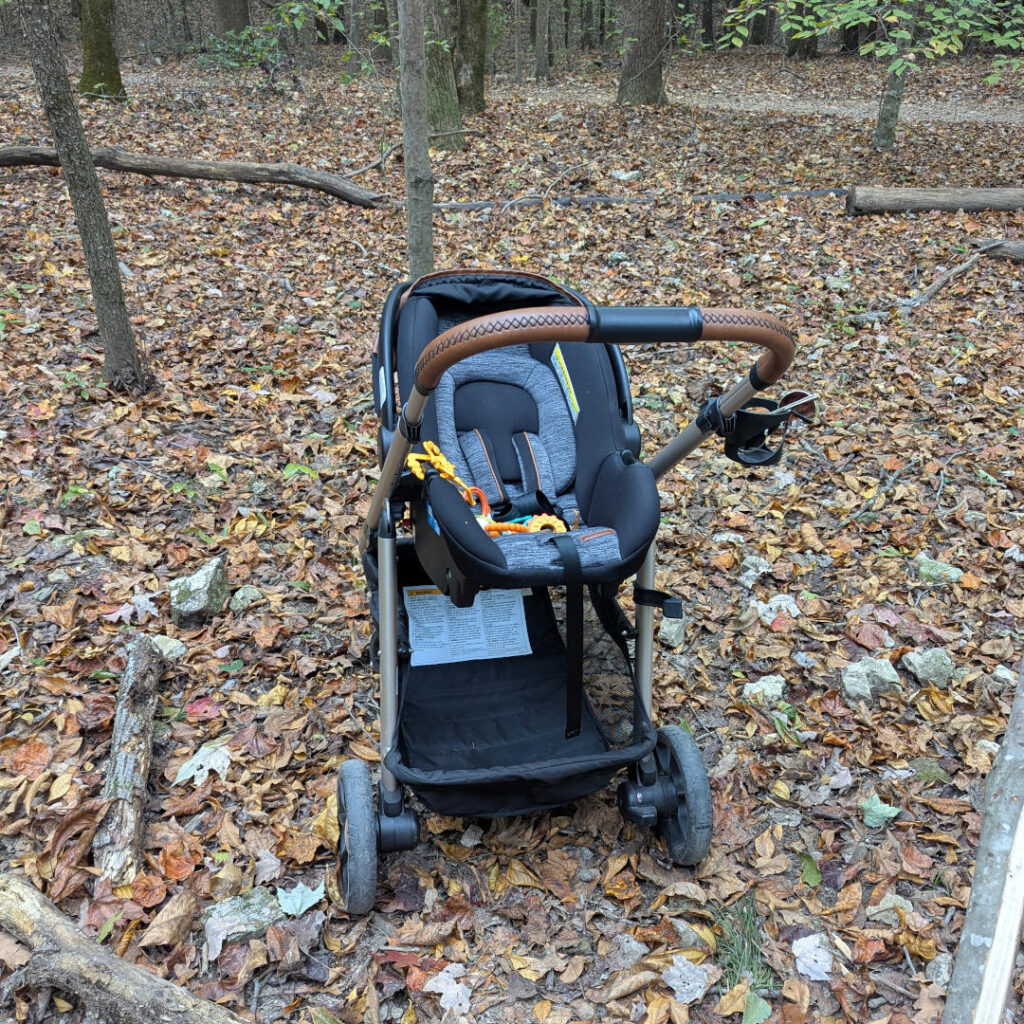
I’ll be upfront here and say that we have not personally tested this one yet. It’s on our to-get list before our camping trip this summer. I have scouted a few out at our local REI, and know what options I plan on considering before we head out.
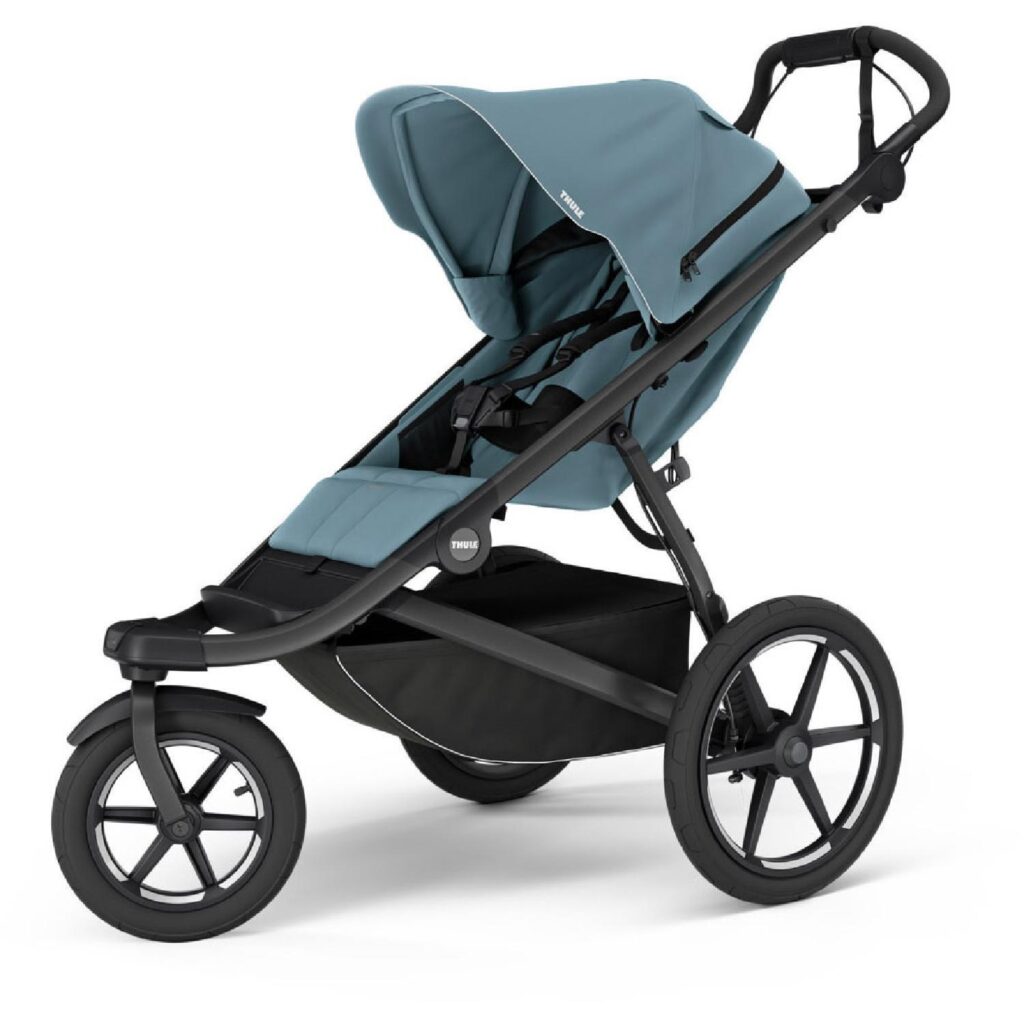
The first one I’ve considered is the Thule Urban Glide 3, available at REI. At 26 pounds it is notably lighter than most of its competition, which matters when you are loading and unloading from a car at a campsite after a long day. The full suspension system handles gravel, grass, and packed dirt without complaint, and the air-filled tires absorb a surprising amount of uneven ground.
I’m also seriously considering the Veer All-Terrain Cruiser XL. I think this is a great option for families with multiple kids, or if you’re wanting to give them a bit more freedom. I also think it’s just seems a bit more fun to take along on an adventure. However, it is a bit bigger and heavier than the Thule. That’s a serious consideration to keep in mind on your next camping trip.
Your Baby Camping Gear List: Final Thoughts
The most important thing I can tell you is to match the gear to the baby’s age and the kind of camping you actually do. A three-month-old at a developed campground needs completely different things than a one-year-old on a waterfall trail. Running that filter through this list can really simplify your approach to camping gear for babies.
Start simple. If this is your first trip with a little one, pick a campground close to home, keep it to one or two nights, and do not try to do everything at once. The gear matters, but the bigger variable is how your baby handles the whole experience. Some kids take to camp life immediately. Others need a trip or two to find their rhythm. Either way, a short low-stakes first trip tells you more than any gear list can. You can also check out my post all about my favorite Walmart camping gear to get yourself ready.

We are putting all of this to the test ourselves this summer, and I will report back with what worked, what we wished we had brought, and what is still sitting in the bag untouched. If you have questions in the meantime, drop them in the comments or shoot me an email at triphelp@floridamanontherun.com.
For a great first camping destination with a little one, my West Virginia road trip recap is a solid place to start. For ideas on making the most of your vehicle at the campsite, my guide to camping in the Subaru Forester has you covered.
Happy camping, y’all.
If this post has helped you plan your next trip and you’d like to help me continue writing and travelling I’d greatly appreciate your support. Following me on social media will help you stay in touch, or you can get a free custom itinerary by signing up for my newsletter!
Don’t Forget to Pin by Using the Images Below!
Leave a Reply