

After nearly 3,000 miles on our Great River Road trip, following the Mississippi from its headwaters in Minnesota all the way down to the Gulf, the only logical finish line was the Crescent City. We pulled into town, found our hotel, and did something that felt genuinely strange after weeks on the road: left the car parked and didn’t touch it again. Walking in New Orleans turned out to be not just the practical choice, but the right one. No driving, no hunting for parking, just two people and a city that rewarded that decision at every single turn.
If you have never been before, you might be wondering: is New Orleans walkable? The short answer is yes, more than almost any other major American city. The longer answer is that it depends entirely on which neighborhoods you are spending your time in and how you use the streetcar to bridge the gaps. The French Quarter, the Marigny, and the areas along the St. Charles line are all built for foot traffic. Get your base right and a car becomes not just unnecessary but genuinely more trouble than it is worth.
This post is part personal recap, part practical guide. I’ll walk you through how our day actually unfolded (the good, the rainy, and the delicious) and then tell you exactly how to set yourself up to do the same. If you’ve got questions about walking around New Orleans after reading or want to share your own experience for others, then hit up the comments section!
This post contains affiliate links. Clicking on them costs you nothing, but it does help support my blog. I promise to never recommend a product or service that I haven’t tried or done plenty of research on. Thanks for reading and supporting!
Why You Should Be Walking in New Orleans
I’ll be the first to admit that “leave the car at the hotel” sounds like obvious advice for a city like New Orleans. And yet plenty of people don’t do it. Parking in and around the French Quarter runs anywhere from $7 to $21 a day on the low end to $12 an hour if you can’t snag an early bird rate. That’s before you factor in the stress of navigating narrow one-way streets in a neighborhood that predates the automobile by about 200 years.
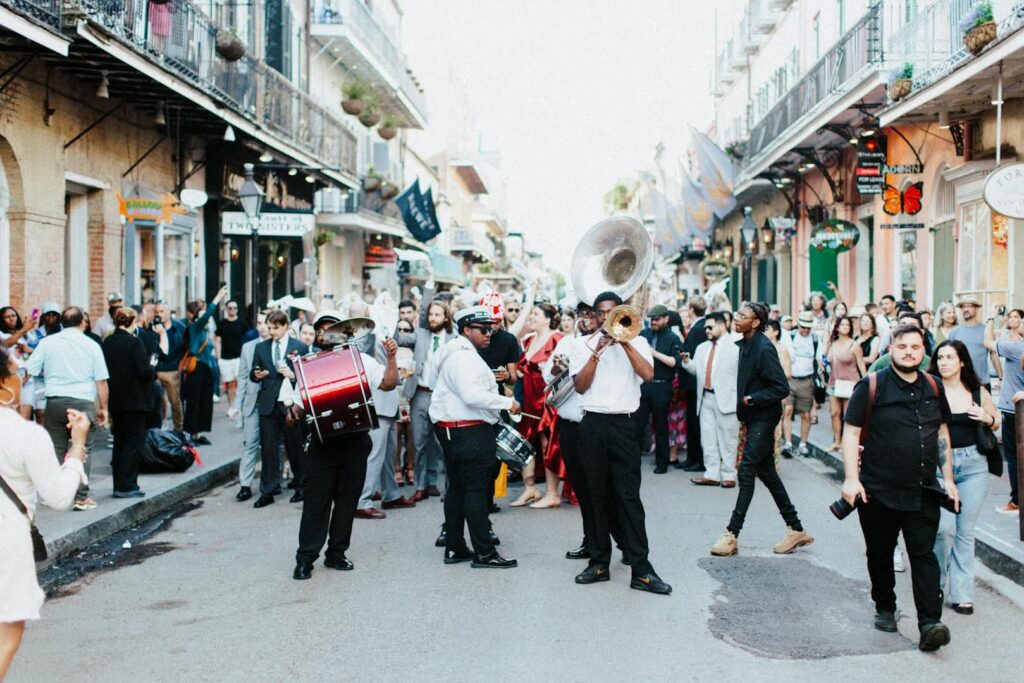
Here’s the thing: the French Quarter is only about 13 blocks by 7 blocks. Walking in New Orleans from one end of the Quarter to the other takes under 20 minutes. The Marigny, home to Frenchmen Street and some of the best live music in the city, is a 10 to 15 minute walk from the far edge of the Quarter. And for everything else, there’s the St. Charles streetcar. More on that shortly.
Beyond the logistics, there’s a simpler argument. New Orleans rewards wandering. The best things that happened to us on our visit happened because we were on foot with nowhere specific to be. You can’t stumble into anything from a car. Park it, leave it, and let the city do its thing.
Your Transportation Toolkit for Walking in New Orleans
You only need two things to get around New Orleans: a comfortable pair of shoes and a Jazzy Pass. The Jazzy Pass is the RTA’s day pass covering all streetcar and bus lines in the city. At about $3.00 for unlimited 24-hour access, it is hands down the best $3.00 you will spend on the whole trip.
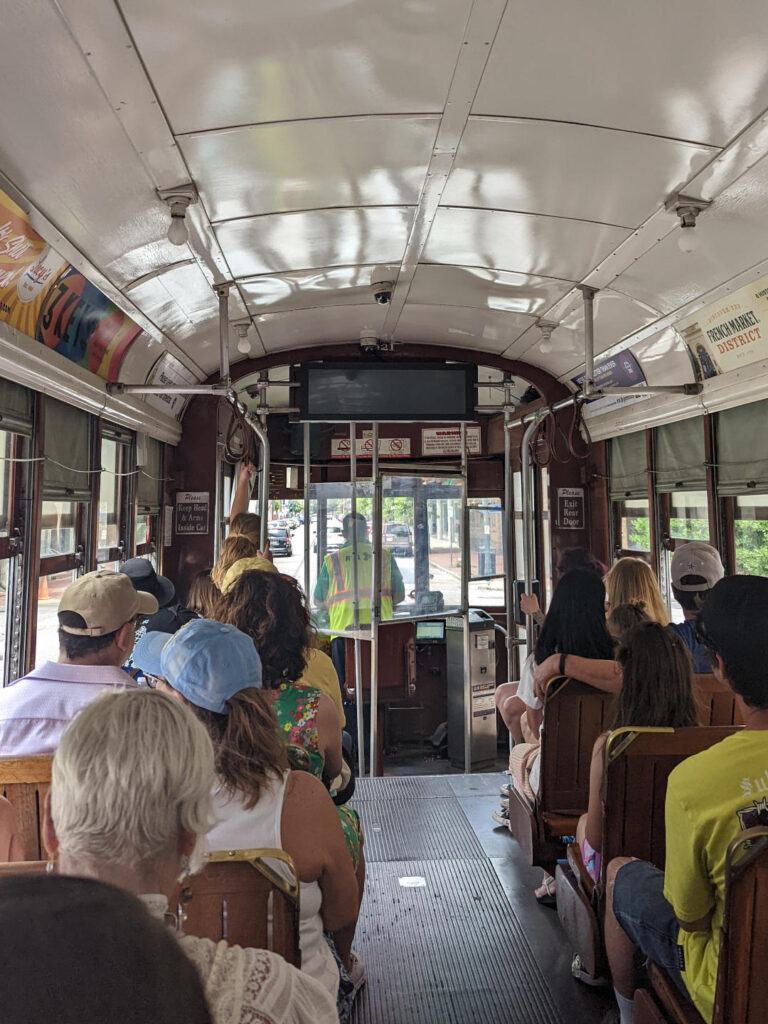
The streetcar you will actually use most is the St. Charles line, which has been running continuously since 1835 and is the oldest operating streetcar in the world. It connects the Central Business District to the Garden District and Uptown in one straight shot up St. Charles Avenue. Worth knowing: the cars are historic and not air conditioned, so dress accordingly if you are visiting in warmer months. For everything the streetcar does not cover, a quick Lyft handles the rest. Walking in New Orleans between the Quarter, the Marigny, and Frenchmen Street requires nothing more than your own two feet.
| Line | Key Stops | Best For |
| St. Charles | Garden District, Audubon, Tulane/Loyola | The backbone of car-free NOLA |
| Canal Street | Mid-City, City Park, Cemeteries | Day 2 or a longer trip |
| Riverfront | French Market, Aquarium, Convention Center | French Quarter connectors |
All lines: $1.25 per ride or $3.00 Jazzy Pass for unlimited 24-hour access.
The French Quarter on Foot
We hopped on the St. Charles streetcar and rode it toward Bourbon Street on a Saturday afternoon in late May. I’ll be honest with you: Bourbon Street is exactly what you expect it to be. Loud, crowded, unapologetically touristy. We loved it. We grabbed lunch at Mambo’s and fueled up before heading out to actually explore the neighborhood.

After lunch we wandered deeper into the Quarter itself. The French colonists who laid out the Vieux Carré in the early 1700s built it to be walked through slowly, and it still works exactly that way. Wrought iron balconies, narrow streets, buildings that have been standing for centuries. You could spend an entire afternoon just looking up.
Then the rain came.
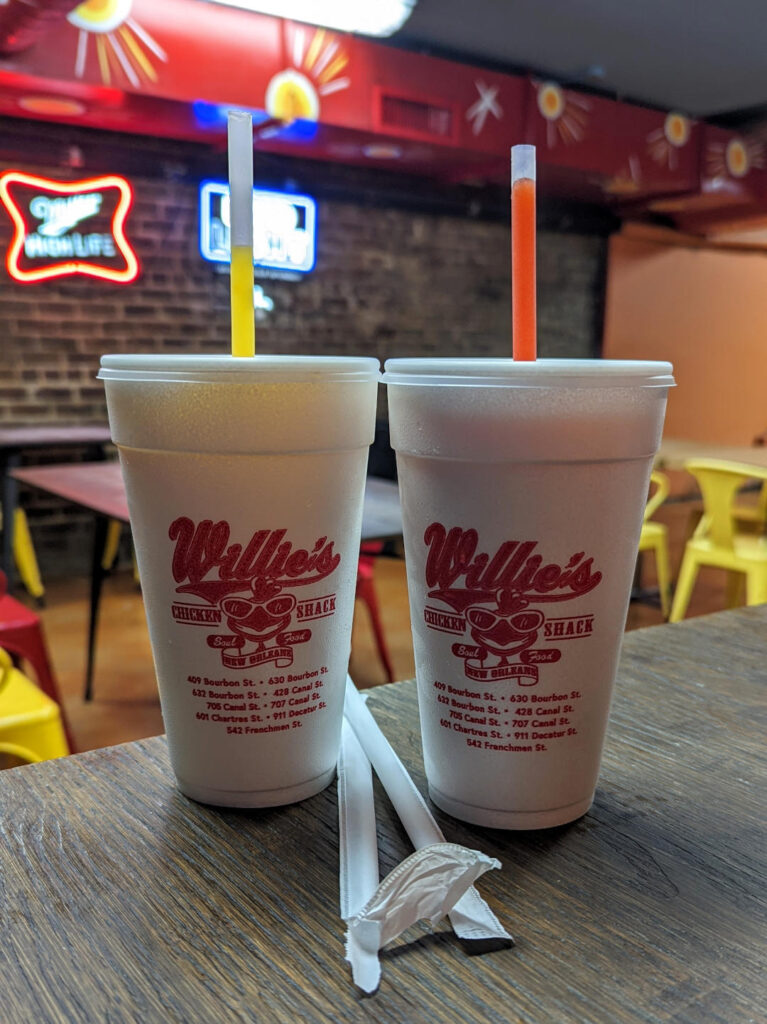
Late May in New Orleans means afternoon thunderstorms, and this one did not mess around. Our little umbrella put up a valiant fight and lost. Fortunately, shelter appeared in the form of Willie’s Chicken Shack, just steps away and serving frozen alcoholic beverages. We settled in, ordered drinks, and waited out the storm in the most New Orleans way possible. Honestly, it ended up being one of the better stops of the whole day.
When the rain cleared we walked directly to Café du Monde. No trip to New Orleans is complete without beignets, and no beignets are more famous than these. Powdered sugar everywhere, café au lait on the side, the Mississippi River just across the way. It only happened because we were already on foot when the rain hit. If we had been in a car, we would have driven somewhere dry and missed the whole thing.

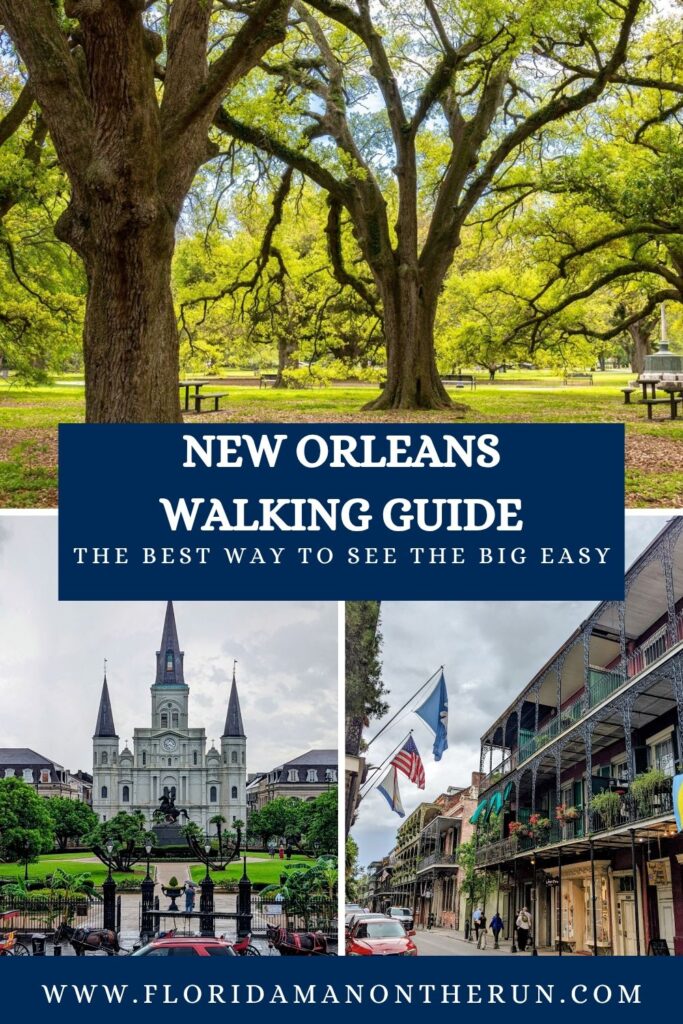
From there we made our way to Jackson Square, the undeniable heart of the Quarter. The St. Louis Cathedral anchors the far end and has been doing so in one form or another since 1718. Street performers, artists, tarot readers, the whole scene. It is one of those spots where walking in New Orleans stops feeling like transportation and starts feeling like the actual activity.
Into the Marigny: Frenchmen Street and the AllWays Lounge
Here is something worth knowing before your trip: Bourbon Street and Frenchmen Street are about as different as two streets in the same city can be. Bourbon is the show New Orleans puts on for visitors. Frenchmen is the show New Orleans puts on for itself. Locals largely moved on from Bourbon years ago, and Frenchmen Street in the Marigny is where that energy went. Live music spills out of every door. The crowd is mixed, relaxed, and actually there for the music rather than the spectacle.
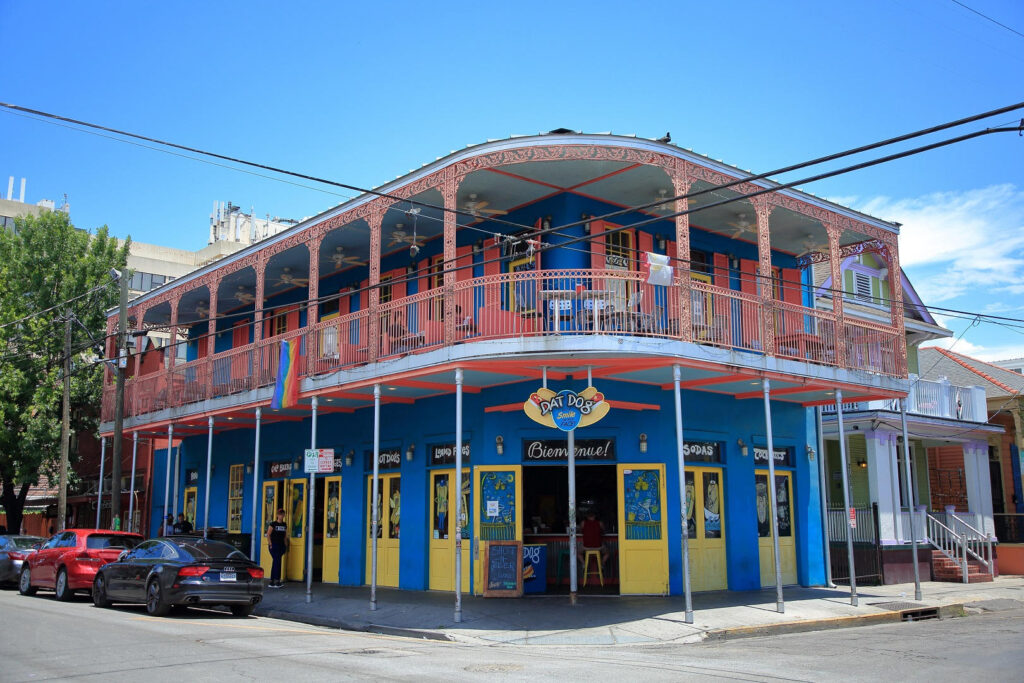
The walk from the far end of the French Quarter into the Marigny is about 10 to 15 minutes on foot, which is one of the great things about walking in New Orleans in this part of the city. There is no cab to call, no streetcar to wait for. You just keep going and the neighborhood changes around you.
We made our way down to Frenchmen Street that evening, which happened to also be my birthday. After soaking in the music scene for a while we landed at the AllWays Lounge and Cabaret at 2240 St. Claude Ave. The two person variety show running that night was absolutely hilarious and a fantastic way to cap off the whole trip. It is the kind of place you only find by being on foot and open to wherever the night takes you. I cannot recommend it enough.

One honest note: the walk back to the French Quarter from the AllWays Lounge late at night is a bit of a haul. It is doable, but if it is late and you are tired, that is a reasonable moment to call a Lyft. No shame in it.
What to Add on a Longer New Orleans Trip
We only had one day in New Orleans on this particular visit, which means a few genuinely great neighborhoods didn’t make the cut. If you have two days or more, here is exactly how I would prioritize the rest of the city. All of it is accessible by the St. Charles streetcar, which is the whole point.
The Garden District
The Garden District is the single best addition for anyone doing a second day of walking in New Orleans. Ride the St. Charles line and get off at the Washington Avenue stop. From there you are steps away from some of the most impressive antebellum architecture in the American South, block after block of 19th century mansions built by the wealthy American merchants who settled here in the 1830s and 1850s. The history of the neighborhood is fascinating on its own terms: these Americans deliberately settled outside the French Creole Quarter, creating essentially two cities within one. That tension still shows up in the architecture today.
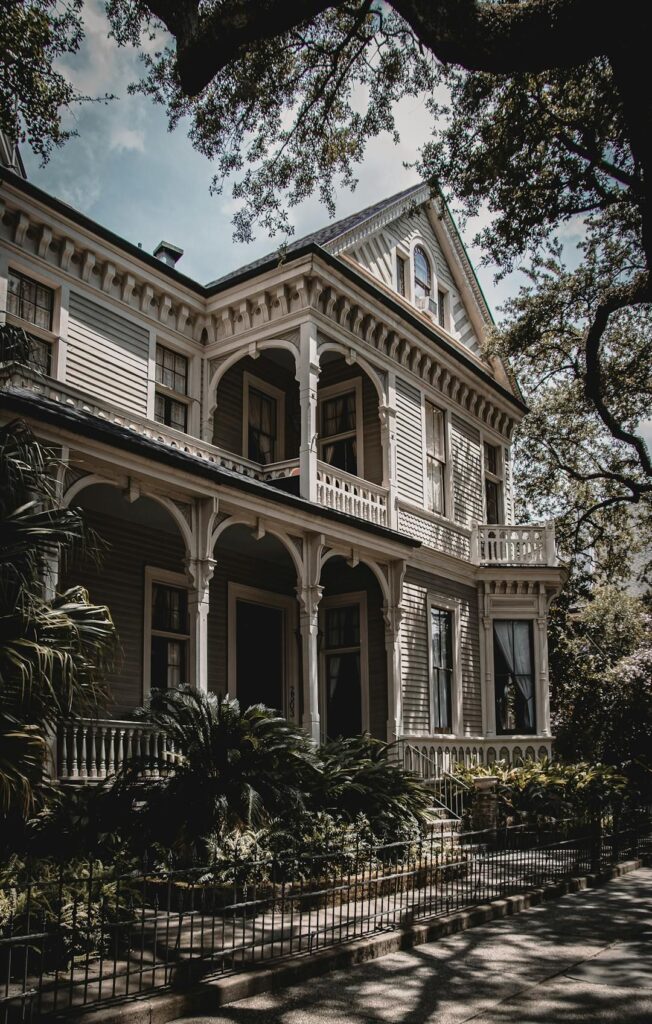
One note of caution: Lafayette Cemetery No. 1, which sits right in the neighborhood, is currently closed to visitors with no confirmed reopening date. Check the status before building your plans around it. Commander’s Palace, the legendary New Orleans restaurant right across the street from the cemetery, is very much open and worth a reservation if your budget allows.
Magazine Street
Magazine Street runs parallel to St. Charles Avenue, just a few blocks toward the river, and stretches for six miles from Canal Street all the way to Audubon Park. The Garden District section is the most walkable and interesting stretch, with local shops, restaurants, bars, and cafes lining both sides. After getting off the streetcar at Washington Avenue, it is about a four to six minute walk to reach Magazine Street. I would plan at least a couple of hours here. It is an easy neighborhood to lose track of time in.
Audubon Park
Audubon Park sits at the far end of the St. Charles line near Tulane and Loyola universities, right across from the Walnut Street stop. The 350 acre park has been a gathering place for New Orleanians since 1898 and is a genuinely beautiful spot, sprawling live oaks, lagoons, running paths, and a relaxed pace that feels worlds away from the French Quarter energy. The Audubon Zoo sits at the rear of the park and is consistently rated among the best in the country.
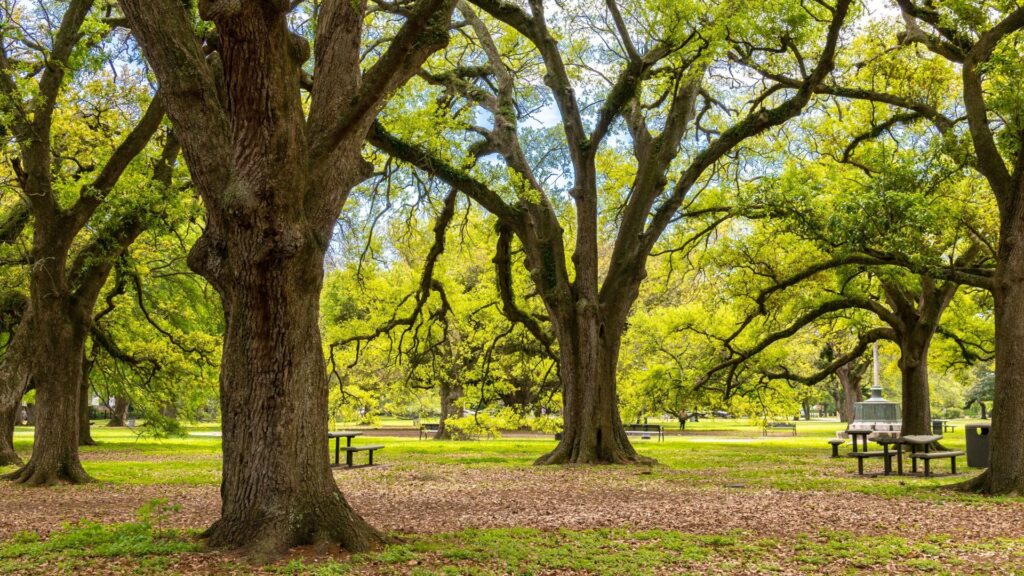
Between the park and the zoo, you could easily fill a half day out here. If you are looking for a place to stay on this end of the line, the Park View Historic Hotel sits right on St. Charles Avenue and has been doing so since the late 1800s. It keeps you well away from the noise of Bourbon Street while the streetcar running right outside the front door keeps you connected to everything else. I have it on my list for our next visit.
Where to Stay for Walking in New Orleans
Where you sleep matters more in New Orleans than in most cities, because your hotel location determines how much of the city you can access on foot before you even think about the streetcar. With that in mind, here are the two options I would point you toward.

If you want to be right in the heart of the action, the Place d’Armes Hotel in the French Quarter is the natural home base for a car-free visit. It sits just steps from Jackson Square, Café du Monde, and everything Bourbon Street has to offer. The rooms are modern and well appointed, the courtyard is a great place to decompress after a long day on foot, and you are regularly looking at under $200 a night for that location. It is hands down the hotel I wish we had stayed at when we came through on our Great River Road trip.

For a quieter base that still keeps you connected, the Park View Historic Hotel on St. Charles Avenue puts you right on the streetcar line with the Garden District and Audubon Park at your doorstep. I covered both of these in more detail in my picks for hotels along the Great River Road if you want the full breakdown.
Final Thoughts on Walking in New Orleans
New Orleans rewarded us at every turn on that late May afternoon. From the moment we left the car at the hotel to the last song we heard drifting out of a doorway on Frenchmen Street, the city did exactly what it does best: surprised us. Walking in New Orleans is not just the practical choice. It is genuinely the right way to experience a place that was built for exactly that. Plus, after you’ve done the best road trip in Louisiana, it’s time to leave the car for a bit!
We only scratched the surface on this trip, and I mean that literally. The Garden District, Magazine Street, City Park, a full night on Frenchmen Street, all of it is still waiting. The Crescent City is absolutely on our return trips list, and hopefully sooner rather than later. If you are planning your own visit and want help putting together an itinerary, reach out at triphelp@floridamanontherun.com. I am happy to help.
If this post has helped you plan your next trip and you’d like to help me continue writing and travelling I’d greatly appreciate your support. Following me on social media will help you stay in touch, or you can get a free custom itinerary by signing up for my newsletter!
Don’t Forget to Pin by Using the Images Below!
Leave a Reply