

If you’re planning a trip to the Mountain State, narrowing down the best state parks in West Virginia can feel overwhelming. The state park system is extensive, geographically diverse, and built around some of the most scenic terrain in Appalachia. For travelers who want to experience West Virginia’s natural character without venturing deep into remote backcountry, the state parks offer the most accessible and well-rounded entry point.
But not every state park offers the same type of experience.
Some are built around a singular natural feature. Others blend scenery with historical preservation. A few function almost like mountain resorts, combining infrastructure with access to the outdoors. If you’re planning a multi-day trip to West Virginia and want to prioritize the most compelling public lands, the question isn’t simply “Which park is closest?” It’s “Which park delivers the kind of experience I’m looking for?”
This is not a ranked list, and it’s not designed as a road trip itinerary. Instead, the goal is to help you understand what makes each park stand out so you can decide which aligns with your travel priorities. However, I think that these are the seven best state parks in West Virginia for visitors who want memorable scenery, recreational depth, and a clear sense of place.
Babcock State Park
Babcock State Park was the first state park I visited on my road trip through West Virginia. It’s located adjacent to New River Gorge National Park and roughly 20 miles southeast of the New River Gorge Bridge. For first-time visitors building a broader itinerary, that placement matters. It allows you to pair classic Appalachian scenery with the adventure infrastructure of the New River Gorge region without committing to a remote backcountry experience.
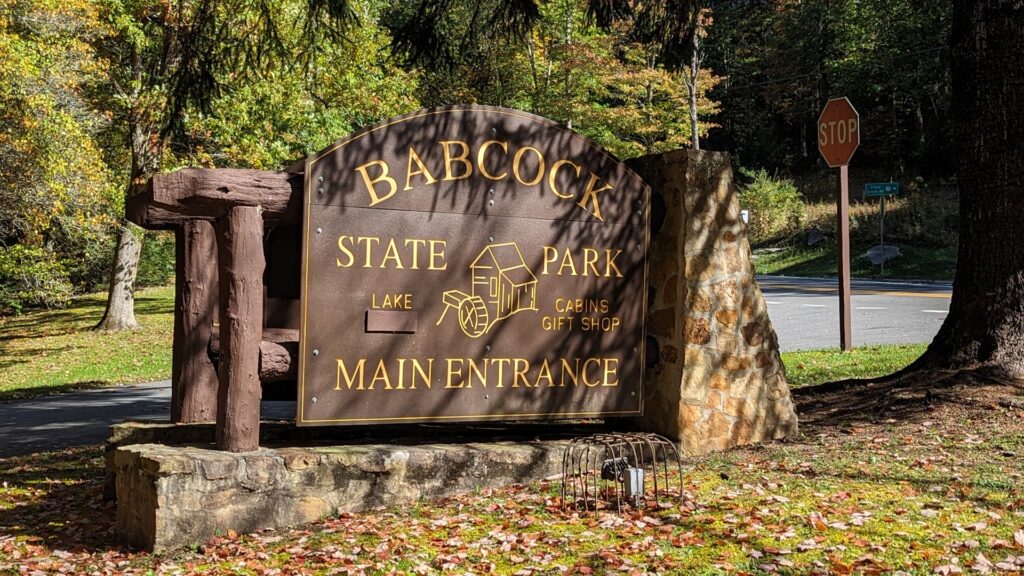
The park encompasses just over 4,100 acres of forest centered around Glade Creek and Boley Lake. At roughly 2,500 feet in elevation, the hardwood canopy becomes especially distinctive in October. Those geographic fundamentals explain what Babcock does well: concentrated, highly photogenic Appalachian landscape in a compact, accessible footprint.
The defining feature is the Glade Creek Grist Mill. The current structure was completed in 1976 using parts from several historic mills across the state. It functions as both an interpretive structure and a working mill, and it has become one of the most recognizable images associated with West Virginia.

Practically every photographer worth their salt, including myself, has tried to capture the mill on their visit. The significance isn’t just visual. For a first-time visitor, the mill compresses landscape, water, and Appalachian history into a single focal point. You don’t need deep context to understand what you’re looking at.
Babcock earns its place among the best state parks in West Virginia through balance. It is not the largest or most remote park in the system. What it offers instead is coherence. More than 20 miles of hiking trails circulate through forest and creek corridors without requiring technical navigation. Boley Lake adds controlled water access, and the cabin and campground system allows overnight stays without sacrificing comfort.
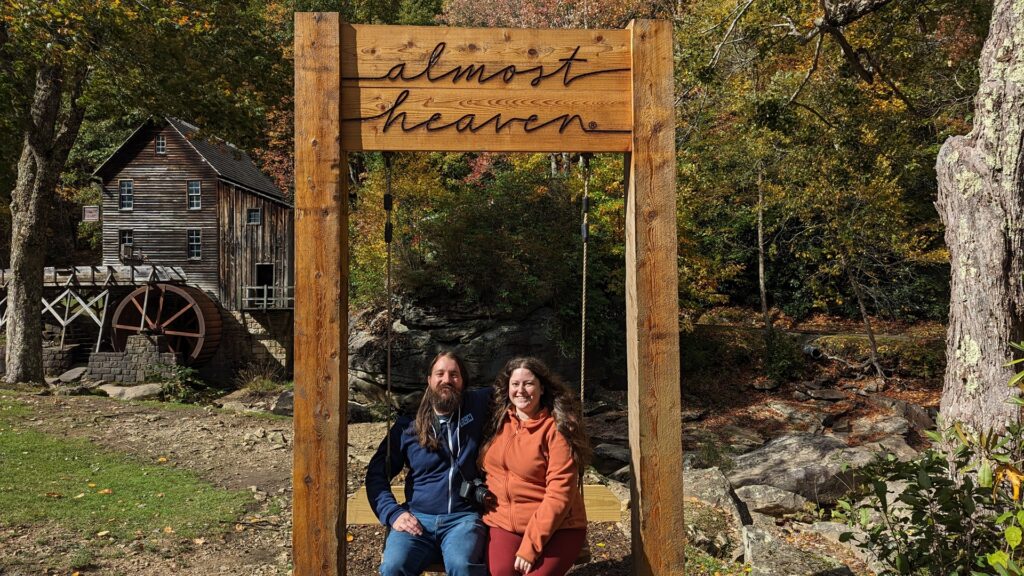
If you want an immediately recognizable Appalachian setting without logistical complexity, Babcock is a strong candidate. As an introduction to the aesthetic identity of West Virginia state parks, Babcock delivers with consistency rather than spectacle.
Blackwater Falls State Park
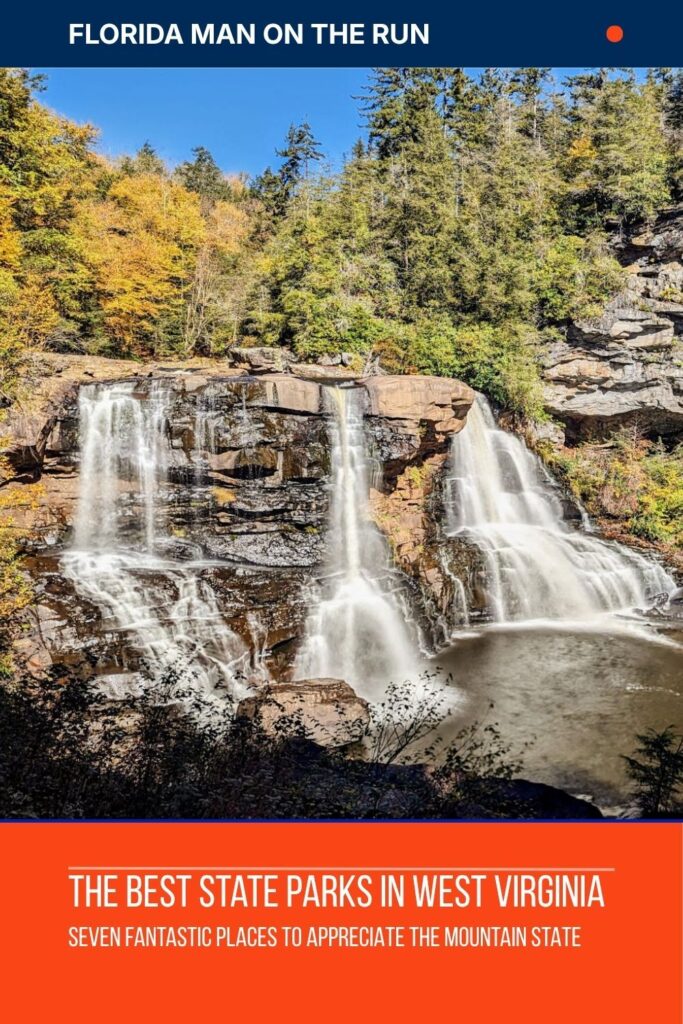
Blackwater Falls State Park, located in Tucker County near the town of Davis, is one of the most visually dramatic parks in the West Virginia state park system. In October, the surrounding hardwoods shift into concentrated fall color, and the contrast between amber water, red and gold canopy, and dark canyon rock creates one of the strongest autumn landscapes in the state. For first-time visitors seeking immediate scenic payoff, Blackwater Falls offers clarity and scale without logistical complexity.

The waterfall itself drops approximately 57 feet along the Blackwater River, whose dark amber coloration comes from tannins released by fallen red spruce and hemlock needles upstream. That natural tint gives the park a distinctive visual identity across seasons. A maintained boardwalk and stair system leads visitors down into the canyon, concentrating the experience into a short but memorable descent.
Beyond the main falls, the park expands outward along the rim of Blackwater Canyon. Overlooks such as Lindy Point and Pendleton Point provide wider perspective on the river corridor, adding scale beyond the primary cascade. If you have a full day, layering in those viewpoints after the main falls turns a short stop into a genuinely complete visit.

What earns Blackwater Falls a place among the best state parks in West Virginia is efficiency. The visual impact is immediate, yet the park still supports a half-day or full-day visit if you choose to layer in overlooks and longer hikes. During peak fall foliage, visitor traffic increases. In winter, snow and ice can limit access to certain areas but fundamentally change the atmosphere.
Canaan Valley Resort State Park
Canaan Valley Resort State Park sits in Tucker County, not far from Blackwater Falls, but it offers a very different experience. The valley floor sits at roughly 3,200 feet above sea level, making it one of the highest large valleys east of the Mississippi River. However, the surrounding area reaches heights of nearly 4,300 feet, which is why it’s home to one of the best skiing areas east of the Rockies. That elevation shapes everything about the park, from cooler summer temperatures to reliable winter snow.
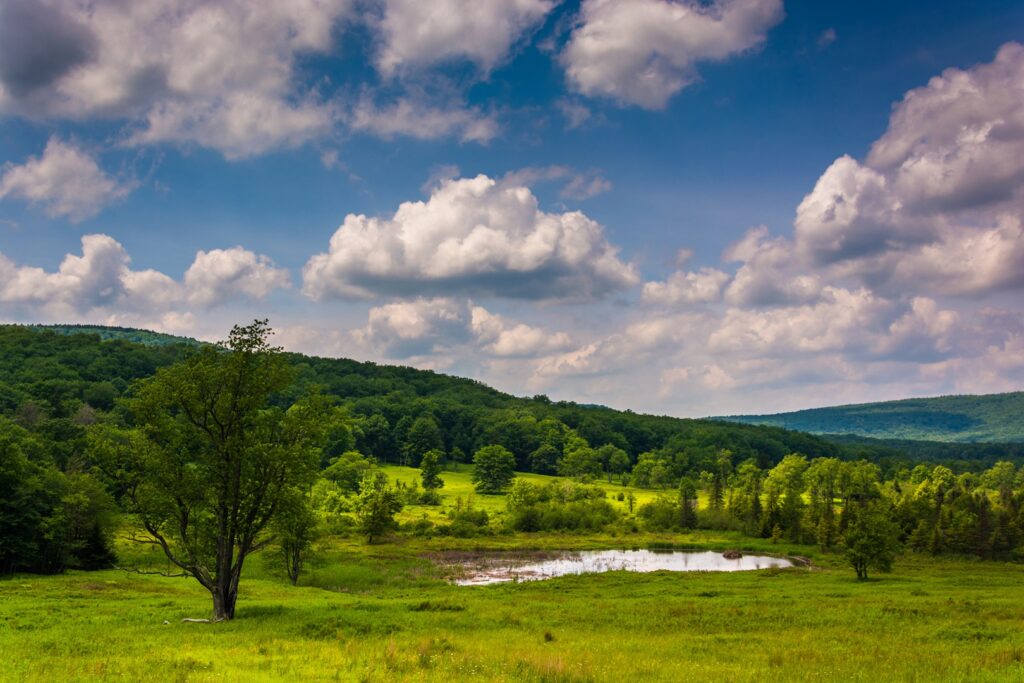
The landscape here feels wider and more open than many other West Virginia state parks. You are not moving through narrow hollows or steep river gorges. You are looking across meadows, wetlands, and forested ridgelines. In fall, the color spreads across the valley floor and climbs up the surrounding slopes, creating layered views rather than a single focal point.
What sets Canaan Valley apart is infrastructure. This is one of the few parks in the system built around a full-service lodge, restaurant, golf course, and ski area. In winter, the ski slopes and tubing park become the main draw. In warmer months, hiking and biking trails move through forest and open terrain. The park also connects to the nearby Canaan Valley National Wildlife Refuge, adding even more space to explore.
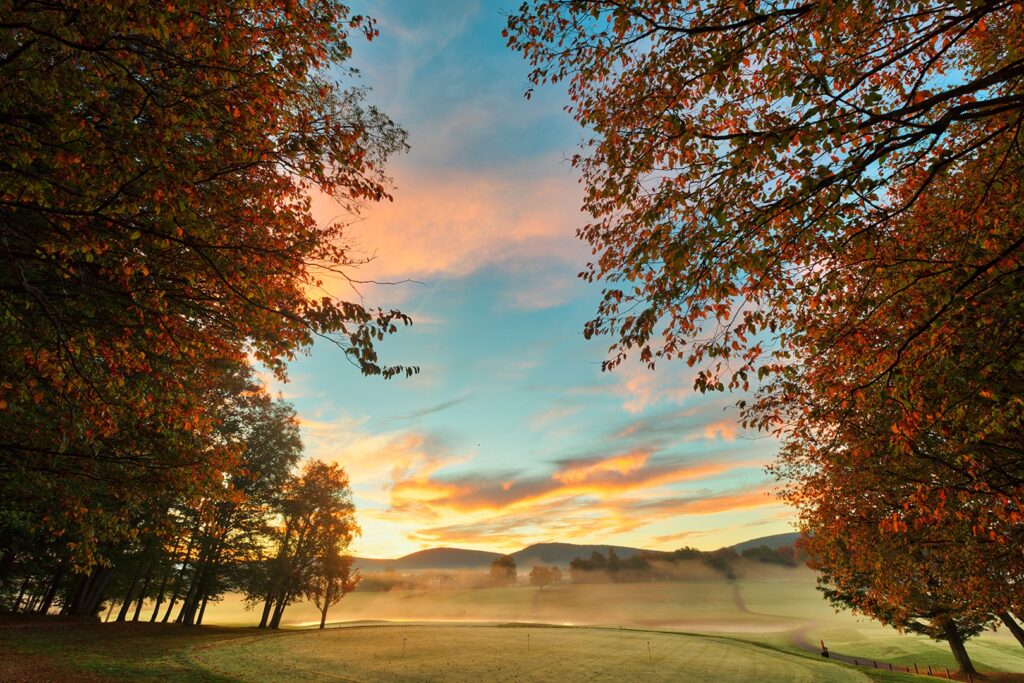
Canaan Valley earns its place among the best state parks in West Virginia because it blends comfort with landscape. You can stay in the lodge, book a cabin, or use the campground. You can spend the day outside and still return to structured amenities in the evening. That balance makes it especially appealing for families or travelers who want mountain scenery without giving up convenience.
Cass Scenic Rail Road State Park
Cass Scenic Rail Road State Park sits in Pocahontas County in the mountains of eastern West Virginia. The park is built around the preserved logging town of Cass and its working steam locomotives. Instead of hiking to a view, you ride into it. That shift alone makes Cass one of the more distinct entries among West Virginia state parks.
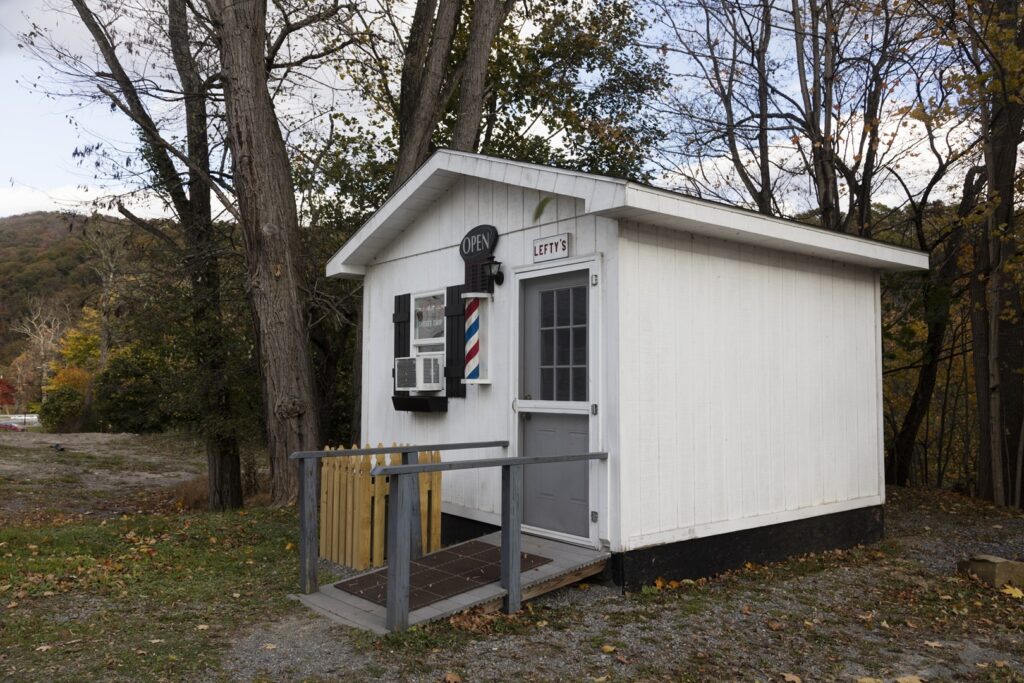
The town itself still looks like a company town from the early 1900s. Small white houses line the road. The depot and rail yard remain active. When the locomotive begins to move, the sound and pace set the tone. It really gives you an opportunity to simply sit back and enjoy the wonderful surroundings without much hurry or worry.
I visited in the fall and rode the route from Cass to Durbin. The timing worked well. The train moves at a steady, unhurried pace, which gives you time to watch the changing color along the river and hillsides. It is not a thrill ride. It is a quiet way to spend part of the day, and that calm is part of the appeal.
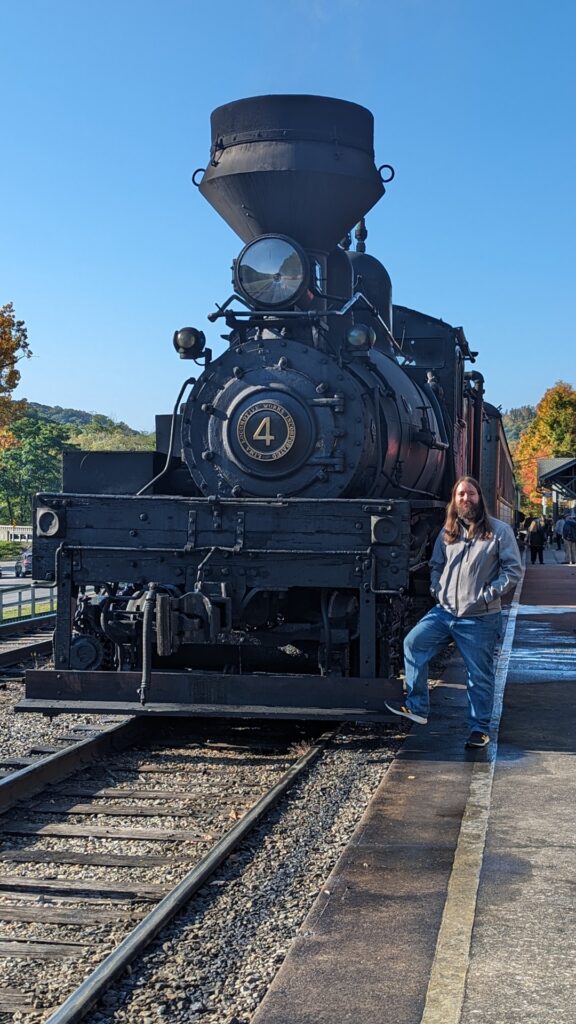
Cass earns its place among the best state parks in West Virginia because of that nostalgia factor. You are not just looking at history on a sign. You are sitting in restored rail cars, pulled by equipment that once powered the state’s timber industry. The experience feels tangible. Even if you do little more than ride the train and walk through town, it still feels complete.
From a value standpoint, I found the ticket price fair for the length of the trip and the uniqueness of the setting. Few parks in the system offer an experience built around preserved machinery and living history.
If you are looking for a relaxed half-day with strong fall scenery and a sense of the past, Cass is a strong fit. It stands out because it turns nostalgia into the main attraction and it does so in a way that feels authentic rather than staged.
Chief Logan State Park
Chief Logan State Park is located in Logan County in southern West Virginia. Often, this is a part of the state which is bypassed by visitors. The terrain here is defined by forested ridges, narrow valleys, and a strong sense of regional identity tied to Appalachian history.
The park centers around Chief Logan Lodge and a small lake, with hiking trails that move through hardwood forest and along rolling hills. The landscape is not built around a single dramatic feature. Instead, it offers a steady, wooded setting that feels removed from highway corridors and major tourist traffic.
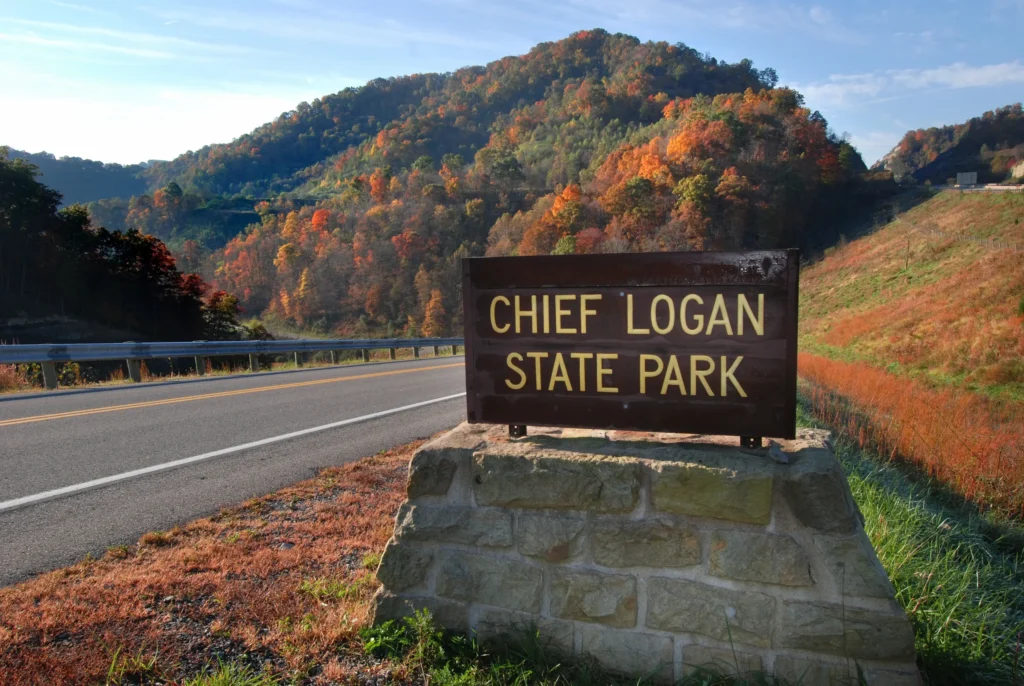
Chief Logan earns its place among the best state parks in West Virginia thanks to its straightforward preservation of West Virginia. Southern West Virginia has its own character, and this park gives visitors a way to experience it without complicated logistics. The lodge, campground, and road network make access straightforward, while the trail system supports short walks or longer outings.
This park is well suited for travelers who value quiet surroundings and a slower pace. It may not deliver the vertical scale of a canyon or the novelty of a historic railroad, but it offers something equally important: consistency. The forest is dense, the setting feels local, and the experience is easy to manage.
Pricketts Fort State Park
Pricketts Fort State Park is located in Marion County along the Monongahela River in north-central West Virginia. Unlike parks built around waterfalls or mountain overlooks, this one centers on a reconstructed 18th-century frontier fort. The focus is not elevation or trail mileage. It is daily life on the early Appalachian frontier.
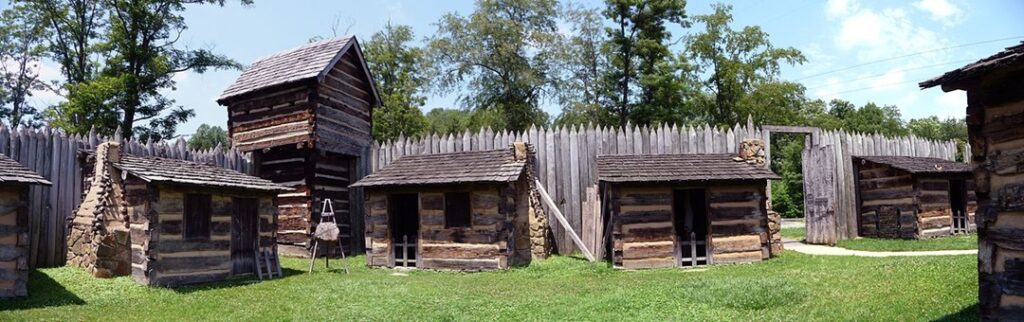
The original Prickett’s Fort was built in 1774 as a refuge for settlers during a period of conflict in the region. Today, the park features a carefully reconstructed stockade fort based on historical records and archaeological research. Inside the wooden walls, costumed interpreters demonstrate blacksmithing, woodworking, cooking, and other trades common to late-1700s Virginia (which included present-day West Virginia at the time).
What sets Pricketts Fort apart is its emphasis on living history. This is not a static museum. On many days, you can watch demonstrations, ask questions, and see how tools and skills shaped daily survival. The experience is hands-on and practical rather than theatrical. That approach makes the history easier to understand, especially for visitors who may not be deeply familiar with frontier-era Appalachia.
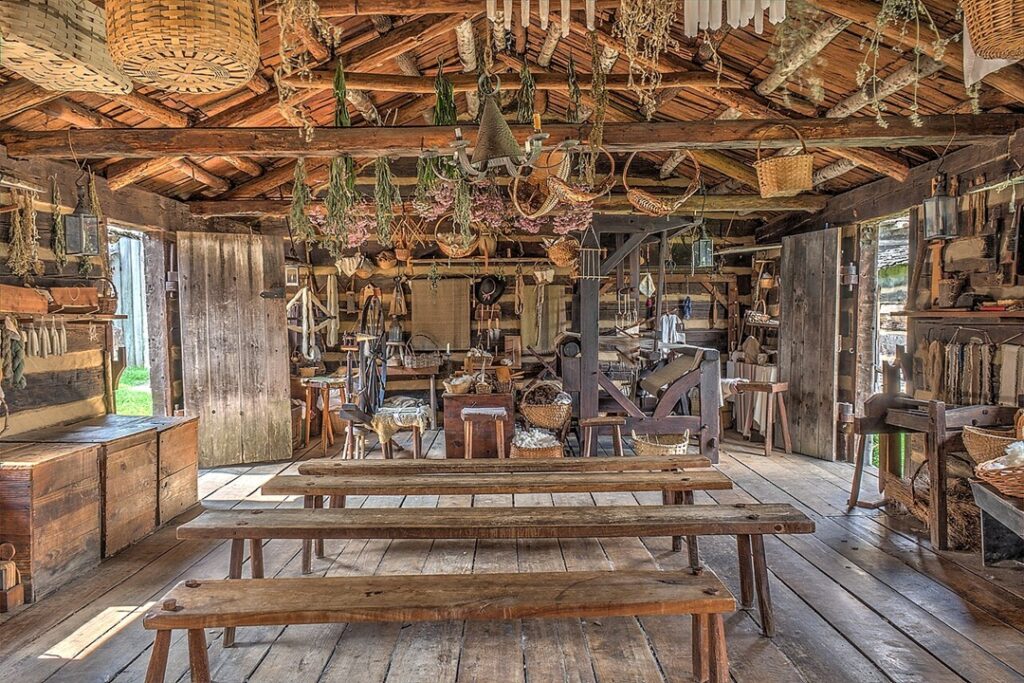
The park also includes walking trails, picnic areas, and river access, but those are secondary to the historic core. The strength of Pricketts Fort lies in interpretation. It explains how early settlers lived, worked, and defended their communities long before West Virginia became a state.
Among the best state parks in West Virginia, Pricketts Fort earns its place by expanding the definition of what a park experience can be. It offers context. It connects landscape to human history. For families, history-focused travelers, or anyone interested in 18th-century life, it provides a structured and educational half-day that feels grounded rather than staged.
Watoga State Park
Watoga State Park is located in Pocahontas County in eastern West Virginia, bordering the vast backcountry of the Monongahela National Forest. At more than 10,000 acres, it is the largest state park in the system. That scale defines the experience. Watoga does not center on one waterfall or overlook. It offers space and you just need the time to use it.

On my trip to West Virginia, I chose to visit Watoga because of its internationally recognized Dark Sky Park designation. On a clear night, even from the campground, the sky felt unusually deep and open. The lack of surrounding development makes a noticeable difference. Stars appear sharper. The Milky Way becomes visible without specialized equipment. Even in the Appalachians, that level of darkness can be rare.
During the day, the park shifts from sky to water and forest. Watoga Lake becomes a central anchor, especially in the fall when calm conditions create clean reflections of red and gold hardwoods along the shoreline. On my visit, a clear autumn afternoon made photography straightforward. The lake is not dramatic in scale, but it is steady and accessible, which makes it easy to return to at different times of day.

Watoga’s trail system extends through dense forest and connects to nearby public land. More importantly, the park serves as a practical base for exploring the surrounding Monongahela National Forest. That broader access is what elevates Watoga among the best state parks in West Virginia. You can spend one day on park trails and another pushing farther into national forest terrain without relocating your lodging.
Watoga earns its place as on of the best state parks in West Virginia because of it’s depth. It rewards patience. Plan for long weekends and extended stays. If you want a base for exploring, stargazing, hiking, and slowing down, Watoga State Park provides the most complete opportunity for immersion within the West Virginia state parks system.
Honorable Mentions
One of my goals in finding the best state parks in West Virginia, was to stick with those given the “state park” monitor. However, that means a couple spots that might be among the best parks in West Virginia didn’t get their own spots on this list.
The #1 honorable mention has to be Coopers Rock State Forest. This amazing location has one of the best sunsets in all of West Virginia at one of the best overlooks in the whole state. It’s also got plenty of trails for hiking or even skiing in the winter, making it a year round destination.
Another state forest worth mentioning is Cabwaylingo State Forest. This was one of the first established in the state by the Civilian Conservation Corps to help restore southern West Virginia’s forests. It features over 100 miles of trails for ATVs, dirt bikes, and other off-road vehicles. Plus, plenty of hiking for those not seeking so much adrenaline.
There are plenty of other excellent state parks you could visit as well. Hawks Nest State Park just north of New River Gorge features amazing views of the canyon below. Holly River State Park is the second largest in the state, offering deep isolation and some of the best wildflowers in the state. One of my personal favorites was Cathedral State Park, which protects one of the last stands of virgin Hemlock in West Virginia and was a perfect quiet hiking spot in the fall.
Wrapping Up West Virginia’s Best State Parks
Exploring the best state parks in West Virginia is one of the most practical ways to experience what makes the Mountain State distinct. Whether you’re planning a long weekend, a full road trip, or simply looking for one strong outdoor base, the West Virginia state parks system offers options that work for different travel styles and time frames.
Of all the parks on this list, Watoga State Park stands out to me the most because of its dark sky designation and the opportunity it provides for a true multi-day stay. Camping there under some of the darkest skies in Appalachia left a lasting impression. That said, each of the parks highlighted here offers a different kind of strength from the fall views at Blackwater Falls to the historic immersion at Cass Scenic Rail Road.
You don’t need to visit all seven to have a meaningful trip. Choosing the park that fits your interests and giving it the time it deserves is usually enough. No matter which direction you go, spending time in one of the best state parks in West Virginia is a reliable way to understand the landscape, history, and pace that define the state. If you’re looking to expand your trip beyond West Virginia state parks, then consider spending some time in Morgantown and the surrounding area!
If this post has helped you decide what West Virginia state park you’d like to visit and you want to help me continue writing and travelling I’d greatly appreciate your support. Following me on Facebook, Instagram, or TikTok will help you stay in touch. If you’re feeling super generous, you can tip me through the Ko-Fi box below! Finally, please share on your social media platform of choice!
Don’t Forget to Pin by Using the Images Below!
Leave a Reply